
|
Email:- info@mkamienidguides.com Call:- +255 794600553 Whatsapp chart 255794600553 HOME DESTINATIONS WILDLIFE SAFARI MOUNT KILIMANJARO TREKKING WILDBEEST MIGRATIONS |
| |

| 
| 
| 
| 
|
|
Arusha, the gateway to the world famous game sanctuaries of Serengeti, Ngorongoro, Tarangire and Lake Manyara, is one of the oldest towns in Tanzania. From a tiny German garrison in 1900, Arusha has grown to become the tourist capital of Tanzania with a population of about 400,000 people.
At 1390 metres above sea level, Arusha enjoys a very agreeable climate throughout the year. Positioned at the centre of Africa between the Cape and Cairo on the Great North Road, Arusha is the administrative seat of the East African Community made up of Tanzania, Kenya Uganda, Rwanda and Burundi.
Arusha offers an excellent opportunity for authentic souvenirs shopping, including the bold Makonde carvings, and the colourful Tinga Tinga works and batiks.
Tanzanite Gemstone:- The native gemstone of Arusha, and one of the most beautiful and exciting gems to come from Africa, is sold in all gemstone shops in town alongside other locally mined stones like Ruby, Rhodolite and Tourmaline. Tanzanite was first discovered in 1967, some 40 kilometres to the southeast of Arusha at Mererani. To date Mererani remains the only commercially viable source for Tanzanite in the world. Tanzanite was named after Tanzania. Tanzanite gemstone has several uses:- . Jewelry: Tanzanite is highly sought-after for use in jewelry due to its rich color and clarity. . Home Decor: Tanzanite's unique color and beauty make it a popular choice for incorporating into home decor items. . Healing Stones Tanzanite is thought to have a range of healing properties that can help promote balance and harmony within the body and spirit. ... Takeaways:- . Tanzanite is a transformative gemstone that promotes inner calm and stimulates higher consciousness. . It offers physical healing by boosting the immune system and aiding in detoxification. . Tanzanite instills confidence, helps overcome fears and anxieties, and promotes calmness. Tanzanite holds great significance in both spiritual and emotional realms. Often associated with tranquility and clarity, this gemstone is believed to help individuals overcome obstacles, enhance intuition, and promote better communication. Tanzanite is useful in treating psychological disorders, stress, and nervous tension, and is excellent for the problem of excessive sweating. It may relieve migraine headaches, and in conjunction with other treatments such as counseling, can help in curing chronic alcoholism. When used in jewelry or meditation, Tanzanite can help align the chakras and promote feelings of peace and relaxation. According to native American lore, this blue and violet gem is a stone of transformation, helping its wearers let go of old patterns and embrace new beginnings. |
| |

| 
| 
|
|
Cultural tours are a popular product in Tanzania that is mostly sold as an add-on to enrich main safari tour programs. Most cultural tour sites in mainland Tanzania were developed by starting with selected villages around Arusha in northern Tanzania and spreading out into other areas. These are traditionally existing villages which have been made accessible to visitors who may have a glimpse of the authentic lifestyle of the more than 120 tribes in rural Tanzania.
Most visitors to Africa, especially first timers, find the continent and its people enchantingly different and a special experience. We at Mkami and Enid Guides appreciate this fact and endeavour to include visits to the local communities to give our guests the opportunity to see first hand the way of life in a typical African village.
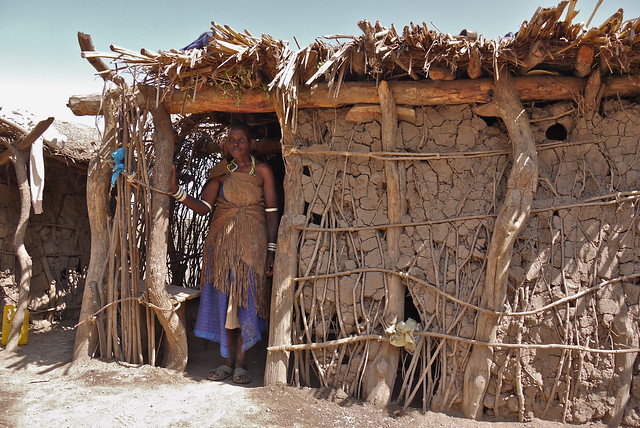
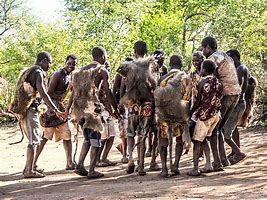
Besides enriching itineraries and adding quality to the tours offered in Tanzania, the cultural tours are generating direct income to the local communities that are being visited, contributing to their development. Thus by visiting the cultural sites the guests would be giving support to community health, water supply, primary education and many other social and economic projects carried out at village level as well as reforestation and protection of environment. Amongstly -Visiting Maasai Bomas(Homestead) Visitors will be shown around the Maasai Boma, and are welcome to explore the huts where Maasai families live and learn a few things about their way of living. The huts, normally built by women, are made of wood, mud and cow dung. The visit lasts about 30 to 45 minutes and at the end the villagers will show off and try to sell their colourful beadwork and other handcrafted wares. If time allows the Maasai warriors would challenge men to engage in a spear throwing match or perform a tribal dance, and ladies may choose to participate in beadwork. This is intended to expose visitors to the Maasai culture though briefly and enrich them with some authentic African experiences. -Lake Eyasi - the Hadzabe and Datoga Lake Eyasi is a very scenic soda lake found on the southern border of the Ngorongoro Conservation Area, a couple of hours drive from Karatu. This less visited lake lies at the base of the Eyasi escarpment on the western Great Rift Valley wall, bordered by the Eyasi Escarpment in the northwest and the Kidero Mountains in the south. This is a hot, dry land, around which live the Hadzabe people, often associated with the Khoisan languages in Southern Africa because of their click language. The Hadzabe are believed to have lived here for nearly 10,000 years and continue to follow hunting-and-gathering traditions. Also in the area are the Iraqw (Mbulu), a people of Cushitic origin who arrived about 2000 years ago, as well as the Datoga also Cushitic, the Maasai and various Bantu groups. The Hadzabe, a hunter-gatherer tribe, live close to the shores of Lake Eyasi, as do the Nilotic-speaking Datoga tribe who are pastoralists. Visits to these tribes are possible on half day or full day excursions which would include a visit to their homesteads, learning about their way of life, medicinal plants, and even animal tracking with bows and arrows with the Hadzabe hunters. |
| |
| 
| 
|
|
The Serengeti National Park is a large national park in northern Tanzania that stretches over 14,763 km2 (5,700 sq mi).It is located in eastern Mara Region and northeastern Simiyu Region and contains over 1,500,000 ha (3,700,000 acres) of virgin savanna. The park was established in 1940.
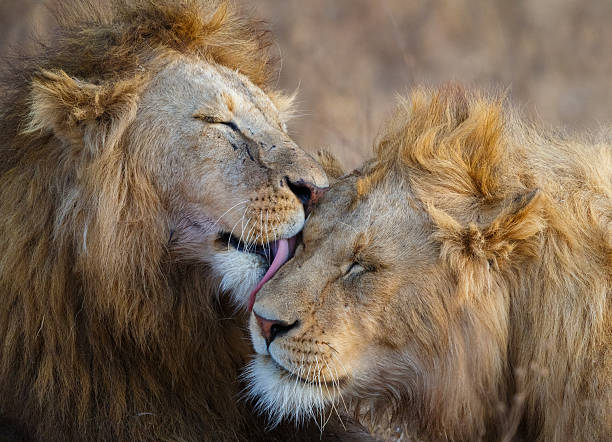
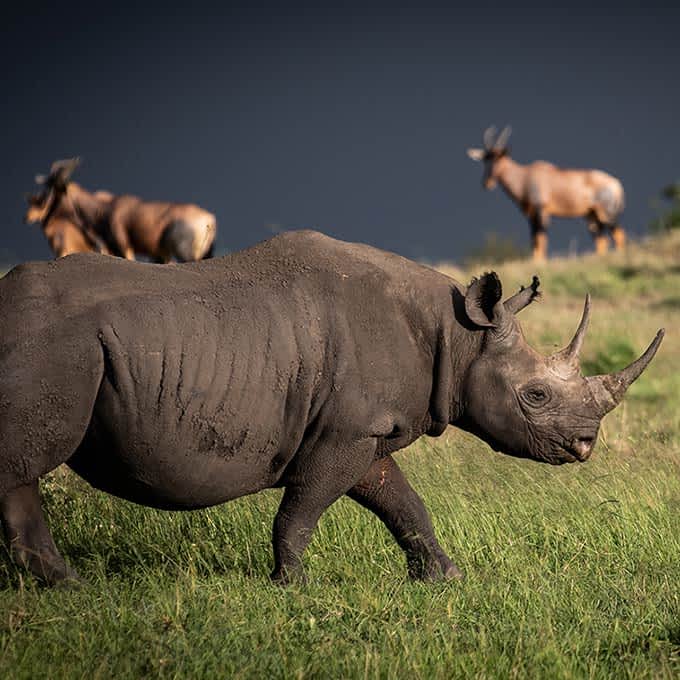
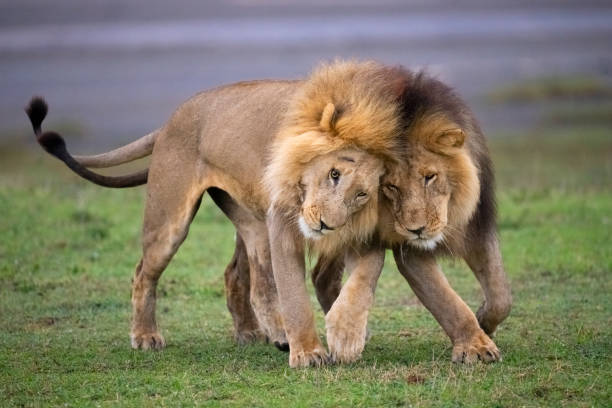
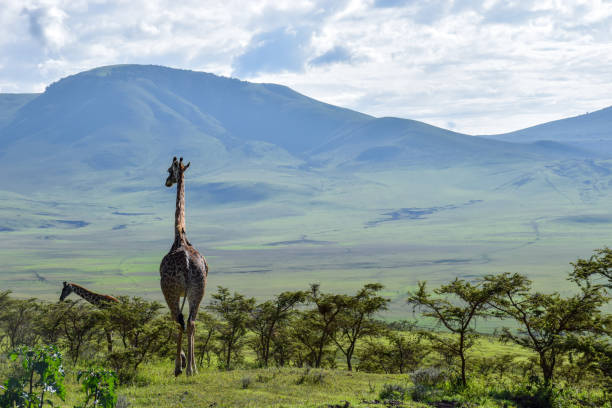
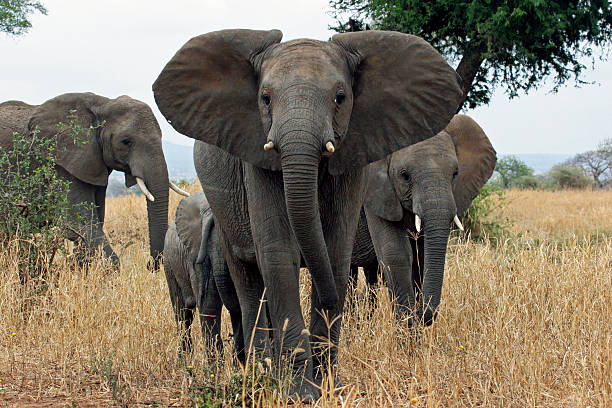
The Serengeti is well known for the largest annual animal migration in the world of over 1.5 million blue wildebeest and 250,000 zebra along with smaller herds of Thomson's gazelle and eland. The national park is also home to over 3,000 lions, 5,000 African bush elephants, 30,000 African buffalo and 70 Eastern Black Rhinoceros. The park is listed by the United Nations Educational, Scientific and Cultural Organization as a World Heritage Site. It is designated as a Category II protected area under the system developed by the International Union for Conservation of Nature, which means that it should be managed to protect the ecosystem or ecological processes. When to visit? It is a matter of choice whether you would like to plan your Serengeti safari around the Great Migration. We have mentioned earlier that the Serengeti is a year-round destination as it covers a vast area and offers unparalleled wildlife viewing. Chances that you will be at the exact spot of the Great Migration herd crossing a river (either at the Grumeti or Mara River) are very slim. Also, the timing of herd movements cannot be guaranteed. However, if you choose the right part of the Serengeti: the southeast and Ndutu from December through to May, the Western Corridor from May to July, the Serengeti Mara area from July trough to October, and the northern Serengeti and Lobo area in October and November, large herds of wildebeest and their entourage should be easily located. |
| |
| 
| 
| 
|
|
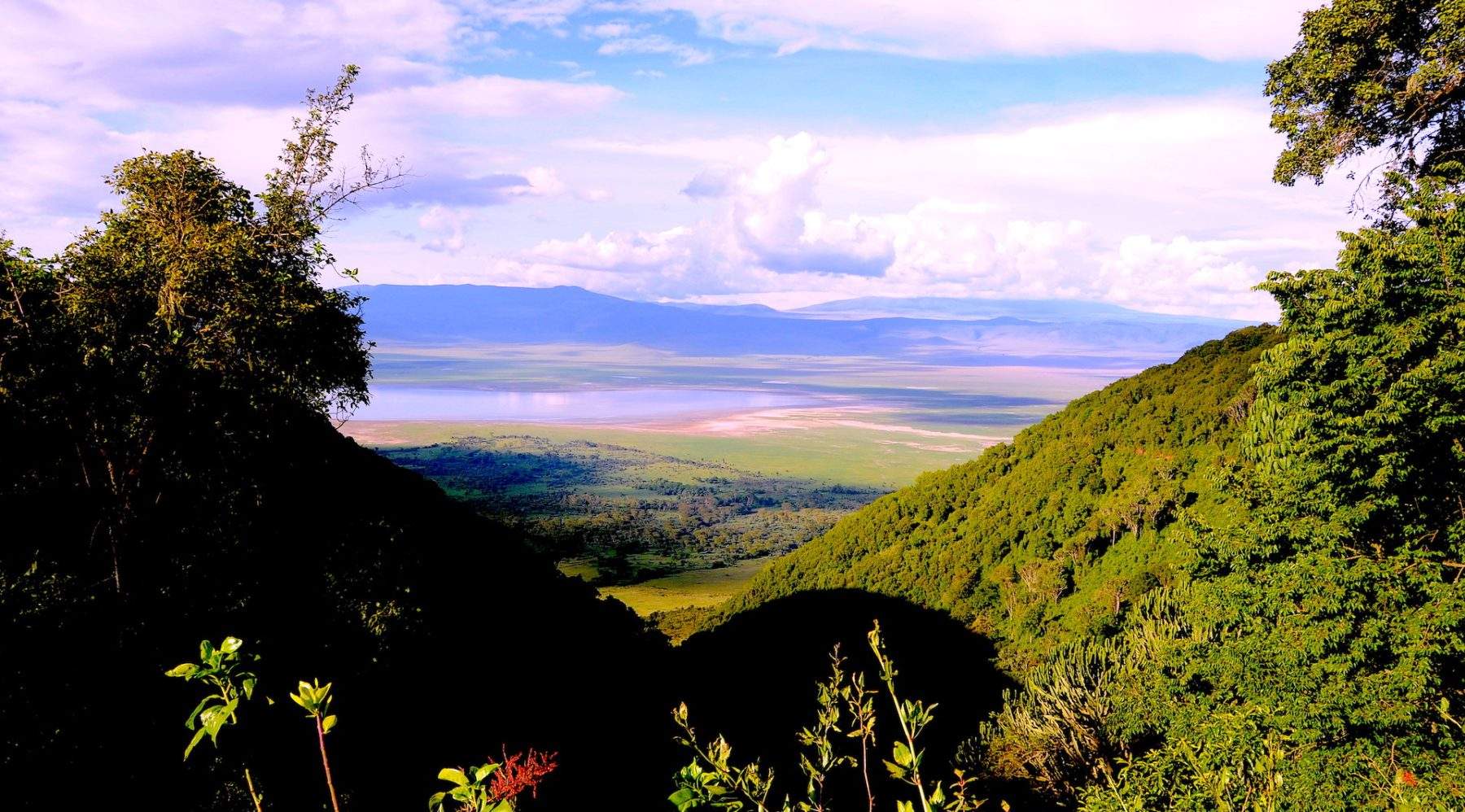
The Ngorongoro Crater is the world's largest inactive, intact and unfilled volcanic caldera. The crater, which formed when a large volcano erupted and collapsed on itself two to three million years ago, is 610 metres (2,000 feet) deep and its floor covers 260 square kilometres (100 square miles). Estimates of the height of the original volcano range from 4,500 to 5,800 metres (14,800 to 19,000 feet) high.
The crater floor is 1,800 metres (5,900 feet) above sea level. The crater was voted by Seven Natural Wonders as one of the Seven Natural Wonders of Africa in Arusha Tanzania, in February 2013.The Ngorongoro volcano was active from about 2.45 to 2 million years ago. Volcanic eruptions like that of Ngorongoro, which resulted in the formation of Ngorongoro Crater in Tanzania, were very common.
Similar collapses occurred in the case of Olmoti and Empakaai, but they were much smaller in magnitude and impact. There are over 25,000 animals in Ngorongoro Crater floor, which travelers can see while on various activities in Ngorongoro Conservation Area. The Ngorongoro Conservation Area also has the highest record of predator per capita, according to the recently concluded wildlife research in Africa. NOTE:- Black Rhino, Elephant, Buffalo, Lion and Leopard - are the Big Five Animals in the Ngorongoro Crater. Moreover, the extraordinary compact area of the Ngorongoro Crater allows you to spot the Big Five animals all year round. A resident population of endangered Black Rhino is one of the most highly sought-after sightings on the crater floor. The opportunity to encounter rare species has greatly impacted tourism in the area. |
| |
| 
| 
|
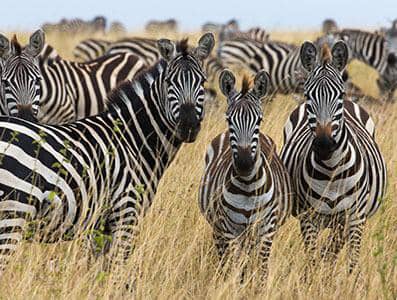
| Tarangire National Park lies 120 km south of Arusha, along The Great North Road highway, and is very popular for day trips from the town. Tarangire offers a wide variety of wildlife in its area of 2,850 sq. km. As in all ecosystems, the vegetation and the types of animals you find are closely correlated. The principal features of the park are the flood plains and the grassland, mainly comprising of various types of acacia trees, and a few scattered baobabs, tamarind and the sausage trees. The Tarangire River, after which the park is named, provides the only permanent water for wildlife in the area. When the Maasai Steppes dry up with the end of the long rains in June, migratory animals return to the Tarangire River, making Tarangire National Park second only to Ngorongoro in the concentration of wildlife. This period stretches between June and October and it is the best season for game viewing in Tarangire. The most common animals found in the park include zebras, wildebeest, lions, leopards, waterbucks, giraffe, elephants, gazelles, impala, gerenuk, lesser kudu and the beautiful fringe-eared oryx. You may be lucky to spot the tree-climbing python, for which the park is famous, or the greater kudu and the roan antelope which are rare species in Northern Tanzania. Over 550 bird species have been recorded in the Park. |
| |

| 
| 
|
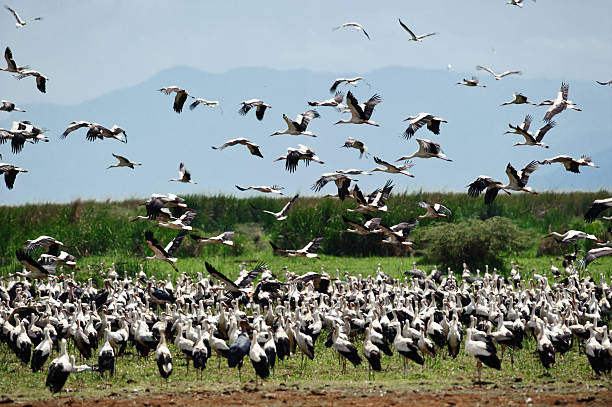
| The Lake Manyara National Park is located 125 km west of Arusha town, nestling by the wall of the Great Rift Valley, Lake Manyara National Park is one of the oldest and most popular sanctuaries in East Africa. The park has a large variety of habitats, making it possible to support a wealth of wildlife in its small area. The main habitats include the shallow soda lake itself which occupies 77% of the National Park total area of 330 sq. km, the ground water forest, open grassland, acacia woodland and the rift wall. The most famous spectacle in the park is the tree-climbing lions, which are occasionally seen along branches of acacia trees. Other animals found in the park include buffalo, elephants, leopards, baboons, impala, giraffes, zebra, wildebeest, ostrich and hippos. Popularly referred to as an ornithologist’s paradise, Lake Manyara National Park contains over 400 bird species found in most savanna and river habitats in East Africa. Common water birds to be seen here are pelicans, spoonbills, Egyptian geese, hammerkops and the migratory flamingoes, which arrive in hundreds of thousands creating one of Africa’s great natural sights over the soda lake. |
| |
| 
| 
|
|
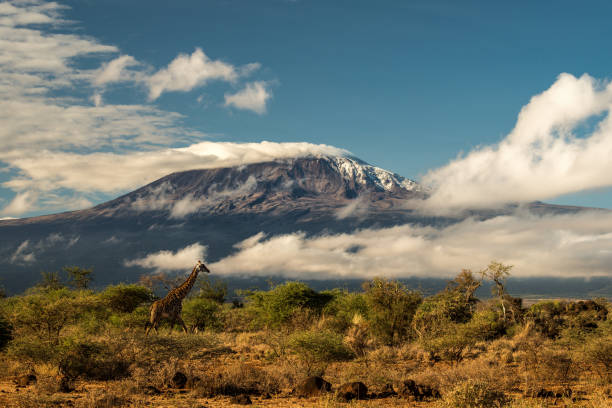
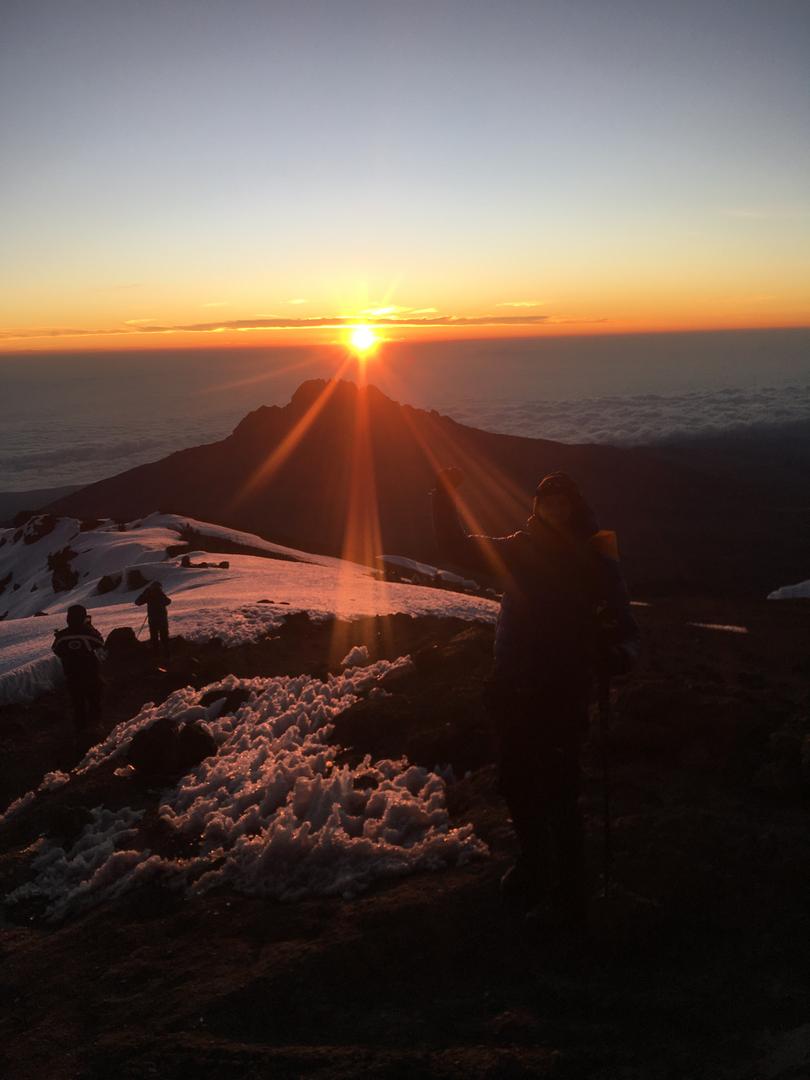
Mount Kilimanjaro is a snow-covered dormant volcano Mountain in Tanzania. It is the highest mountain in Africa and the highest free-standing mountain above sea level in the world, situated at 5,895 m (19,341 ft) above sea level and 4,900 m (16,100 ft) above its plateau base.
It is also the highest volcano in the Eastern Hemisphere and the fourth most topographically prominent peak on Earth as 11th natural wounders of the earth. -Mount Kilimanjaro has three significant peaks, which are volcanic cones: 1. Kibo (the highest point, also known as Uhuru or Kaiser Spitze) at 19,340 feet. 2. Mawenzi (also known as Hans Meyer Peak) at 16,893 feet. 3. Shira, the oldest of the three, which collapsed and was filled in by Kibo's lava flows, creating the stunning Shira Plateau -Climate The climate of Kilimanjaro is influenced by the height of the mountain, which allows the simultaneous influence of the equatorial trade winds and the high altitude anti-trades, and by the isolated position of the mountain. Kilimanjaro has daily upslope and nightly downslope winds, a regimen stronger on the southern than the northern side of the mountain. The flatter southern flanks are more extended and affect the atmosphere more strongly. Kilimanjaro has two distinct rainy seasons, one from March to May and another around November. The northern slopes receive much less rainfall than the southern ones.The lower southern slope receives 800 to 900 mm (31 to 35 in) annually, rising to 1,500 to 2,000 mm (59 to 79 in) at 1,500 m (4,900 ft) altitude and peaking "partly over" 3,000 mm (120 in) in the forest belt at 2,000 to 2,300 m (6,600 to 7,500 ft). In the alpine zone, annual precipitation decreases to 200 mm (7.9 in). The average temperature in the summit area is approximately −7 °C (19 °F). Nighttime surface temperatures on the Northern Ice Field (NIF) fall on average to −9 °C (16 °F), with an average daytime high of −4 °C (25 °F). During nights of extreme radiational cooling, the NIF can cool to as low as −15 to −27 °C (5 to −17 °F). Snowfall can occur at any time of year but is mostly associated with northern Tanzania's two rainy seasons.Precipitation in the summit area occurs principally as snow and graupel of 250 to 500 mm (9.8 to 19.7 in) per year and ablates within days or years. -Climatic zones .Bushland / Lower Slope:, 800 to 1,800 m (2,600 to 5,900 ft) .Rainforest: 1,800 to 2,800 m (5,900 to 9,200 ft) .Heather / Moorland: 2,800 to 4,000 m (9,200 to 13,100 ft) .Alpine Desert: 4,000 to 5,000 m (13,000 to 16,000 ft) .Arctic: 5,000 to 5,895 m (16,404 to 19,341 ft) |